

Across two 14-day controlled diets, participants ate less food each day when food texture encouraged slower eating.
Food texture created the difference in eating rate; body weight did not differ between diets.
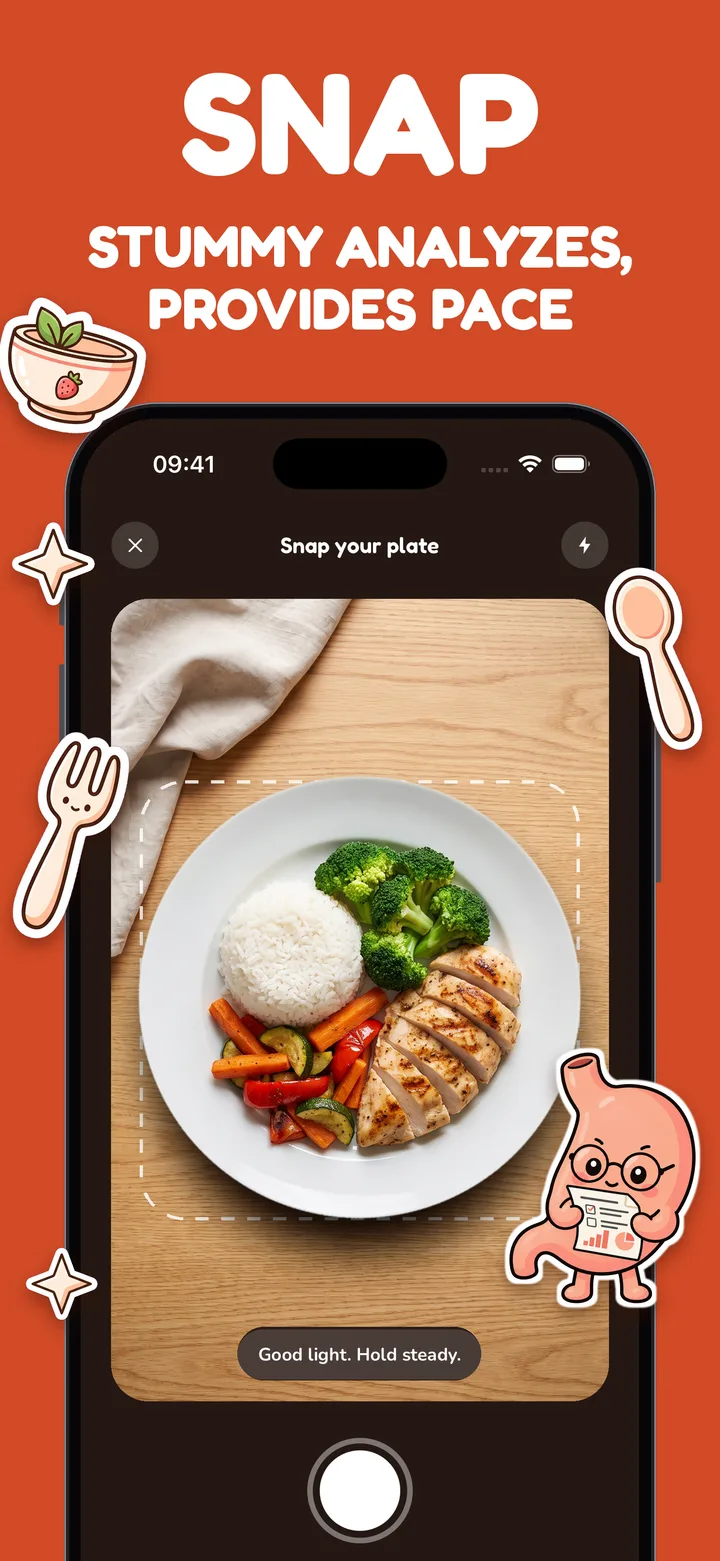
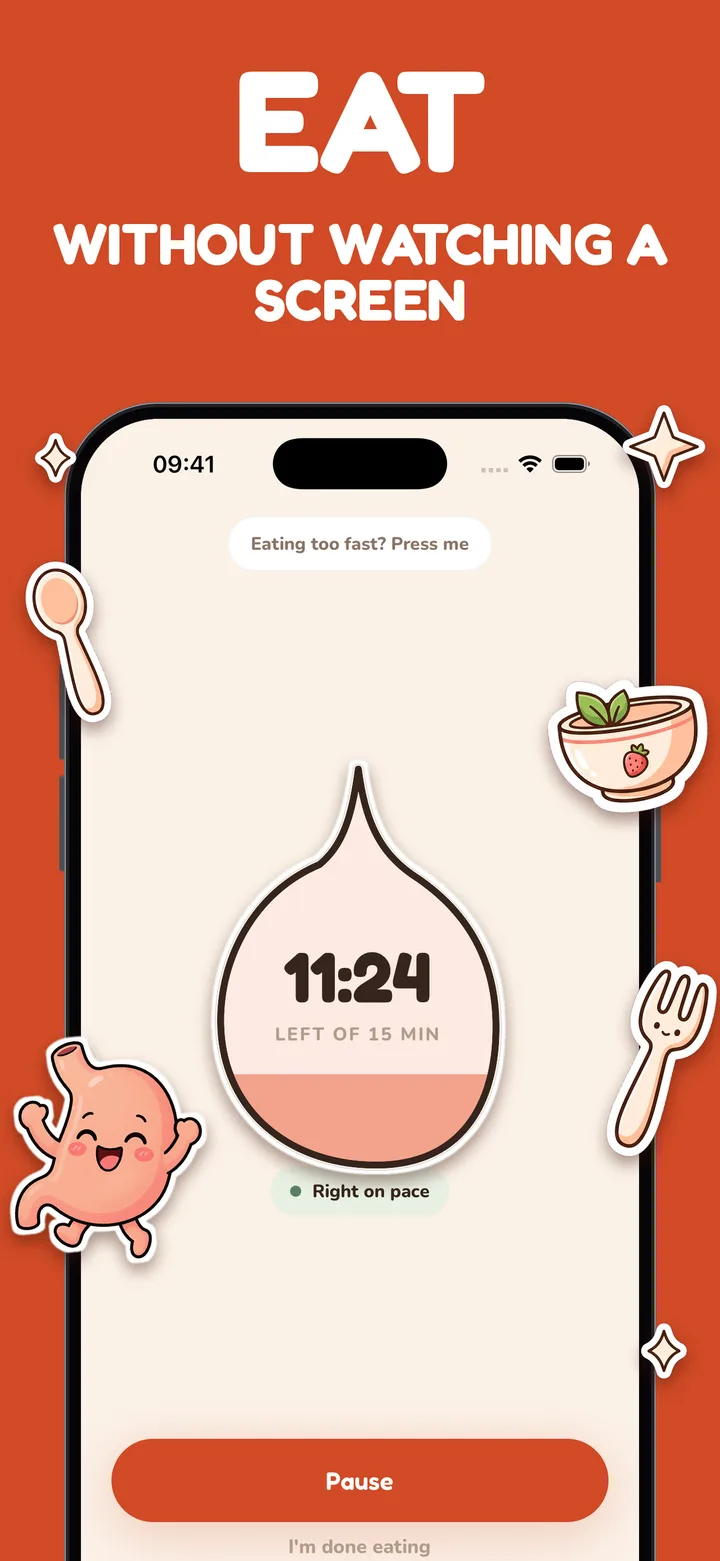
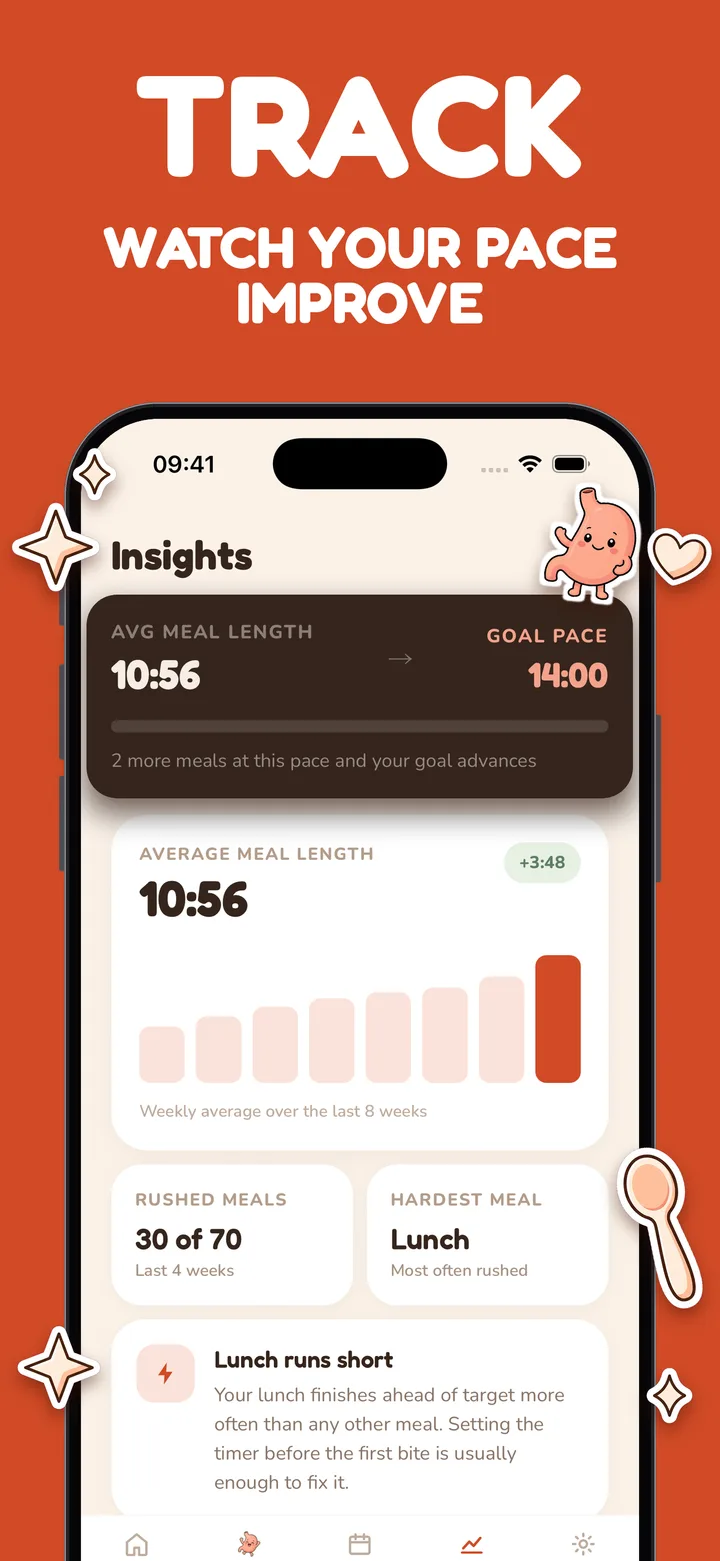
Stummy is the eating-pace coach for iPhone. Snap your plate, get a pace, and eat one bite at a time.

Try it free on the App Store. For iPhone.
Stummy reacts to how you actually ate. Five moods, each with its own screen. It reflects your eating pace, not your health.

Two late dinners in a row and both were quick. Stummy is still working.
A late, quick meal. A calmer pace next time makes it easier to enjoy.

Breakfast was beautifully paced. Lunch is the one to watch.

Paced meals, no rushing, no discomfort. Stummy is doing a little dance.


You logged discomfort today, and the meals behind it were fast.
Stummy draws on published eating-rate research. These studies look at how eating speed relates to how much people eat in one sitting. They do not show that using Stummy improves any health outcome. We show the sources and their limits below.
Across two 14-day controlled diets, participants ate less food each day when food texture encouraged slower eating.
Food texture created the difference in eating rate; body weight did not differ between diets.
Across 24 meals, slower-textured foods led participants to eat about 22% less food on average.
This was a small laboratory study, and food texture produced the slower eating rate.
An analysis of 2,733 controlled meals found that faster eating was consistently associated with eating more at a meal.
The study found an association within controlled feeding data; it did not test a standalone slow-eating intervention.

NIH guidance recommends eating slowly to give the brain time to register that the stomach is full.
This is practical health guidance, not a clinical trial result.

The NHS recommends eating slowly and chewing thoroughly as part of healthy eating habits.
The guidance does not quantify the effect of eating speed by itself.
Results vary between people. Stummy does not promise weight loss or treat medical conditions, and is not affiliated with or endorsed by any organization named above. PubMed is operated by the NIH's National Library of Medicine. Indexing in PubMed does not mean that NIH conducted, funded, or endorsed a study.
No. Stummy never asks for calories, macros or ingredients. The photo is only used to estimate size and texture so it can suggest a pace.
Yes. You can try Stummy for free before you decide. Plans and any free trial are shown in the app before you buy, and you can cancel any time in your Apple Account settings.
Not on day one. Your first target is set just above your current pace and grows week by week, based on your own baseline rather than a universal number.
It gives a recommended range, not false precision. A single photo cannot determine exact weight or calories, so Stummy estimates category, portion and texture and improves as it learns how you eat.
No. There is no email or password. Stummy uses an anonymous profile, and your first name, onboarding answers and meal history are saved to it so they sync. You can delete all of it any time in Settings → Delete my data.
Only with your permission, a photo is sent to OpenAI through Stummy's server so it can estimate texture and portion. Stummy doesn't save the photo. You can turn this off in Settings, and Stummy will use a standard 20 minute pace instead.
No. Stummy supports mindful eating habits. It does not diagnose conditions, treat any health problem or promise weight loss.
Download Stummy, snap your plate and let it set the pace. No account, no calorie counting, and you can try it for free.
Try it free on the App Store. For iPhone.
 Scan to open on your iPhone
